Finding Happiness in NYC: How to Feel Grounded in the Chaos
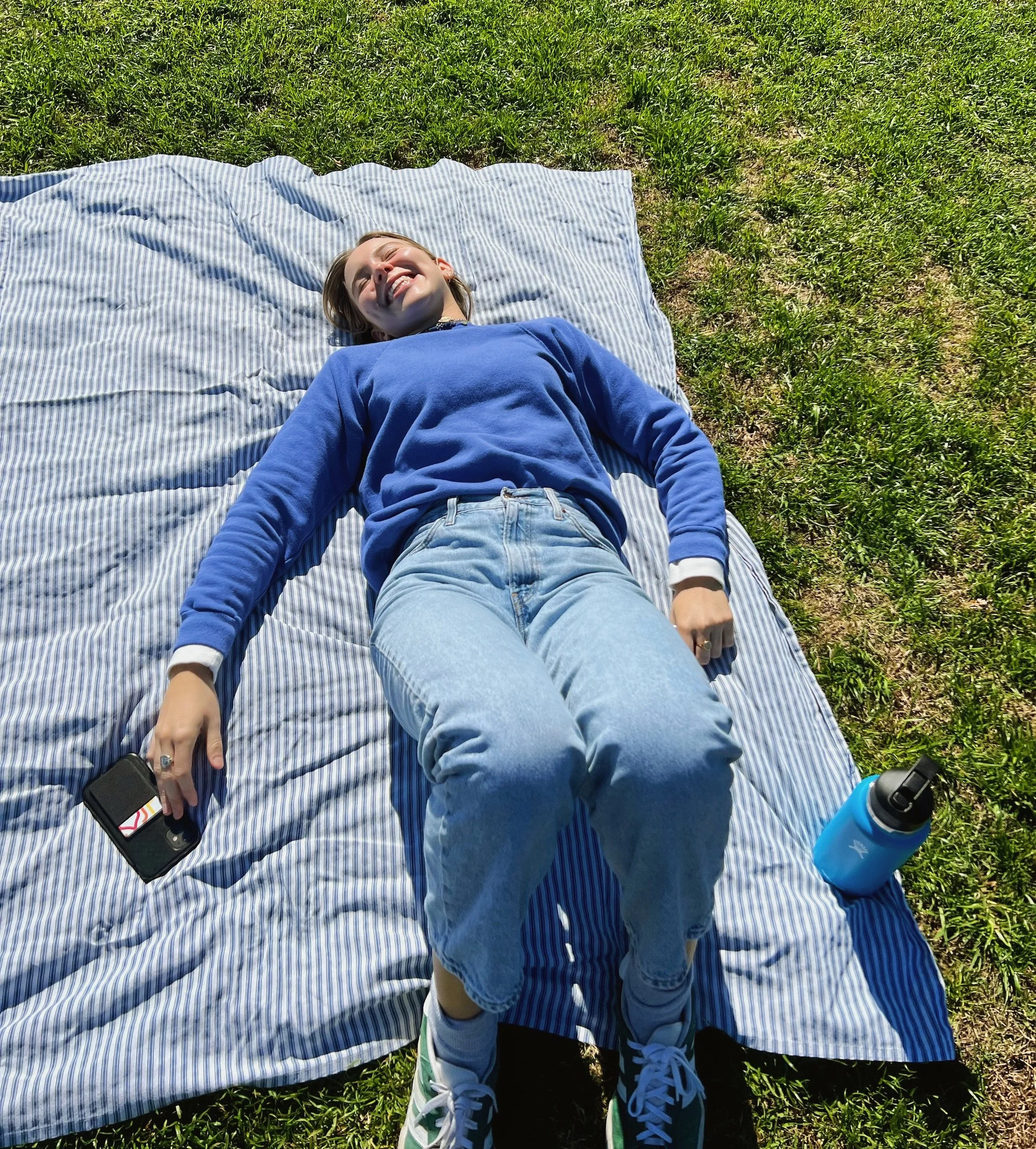
There’s a reason people call New York City a “concrete jungle.” From the inordinately tall buildings to the dramatic personalities, it’s a lot. It’s the city that never sleeps. It’s full of inspiring and unbridled energy. Everyone is in a rush, on a personal mission.
While the city buzz may sometimes be a source from which you derive your own sense of purpose and excitement for life, its chaotic nature can also be deeply draining. Over time, the constant stimulation, pressure, noise, pace, and comparison can begin to disconnect you from yourself. You may notice yourself feeling overwhelmed, burnt out, emotionally scattered, or ungrounded.
The city may even be draining you to the point that you’re losing your sense of inner purpose and stability.
We’re here to tell you that you don’t have to move to find or regain your grounded nature.
You don’t need a quieter city. You need stronger internal grounding.
Read on for therapist-informed approaches to maintaining a stable sense of self while living in New York City.
Why NYC Feels So Emotionally Overstimulating
New York is not just busy. It’s psychologically intense.
You are constantly exposed to:
Sensory overload (noise, crowds, lights, movement)
High-achievement culture
Hustle mentality
Comparison culture
Productivity pressure
Financial stress
Time urgency
Performance-based identity
Social density without emotional connection
This environment keeps the nervous system in a near-constant state of activation.
When your body and mind never fully downshift, you may experience:
Chronic anxiety
Emotional exhaustion
Burnout
Disconnection from your needs
Difficulty relaxing
Restlessness
Decision fatigue
Irritability
Emotional numbness
This isn’t a personal failure. It’s a nervous system response to an intense environment. This constant activation of the nervous system isn’t just a personal experience, it’s supported by APA’s research on chronic stress, which shows how prolonged exposure to high-stimulation environments impacts emotional regulation, mental health, and psychological resilience.
What It Means to Feel Grounded
Groundedness isn’t calmness. It isn’t quiet. It isn’t the absence of stress.
Being grounded means:
Feeling emotionally stable even when life is busy
Staying connected to yourself under pressure
Being able to regulate your nervous system
Making decisions from alignment instead of urgency
Feeling internally anchored even in chaos
Knowing who you are without constant external validation
Grounding is about nervous system stability, not external calm. Research indicates that regulation, not avoidance, supports long-term emotional health.
How NYC Disconnects You From Yourself
Over time, living in constant motion can create patterns of self-disconnection:
You move faster than you feel
You prioritize productivity over presence
You numb instead of process
You adapt instead of reflect
You perform instead of rest
You survive instead of integrate
This creates a life that looks full but feels empty. Busy but disconnected. Successful but unfulfilled.
Therapist-Approved Ways to Stay Grounded in NYC
1. Create Internal Stillness, Not External Escape
You don’t need silence to regulate. You need internal anchoring.
This looks like:
Breath awareness in movement
Body awareness in crowds
Emotional check-ins during busy days
Pausing before reacting
Slowing your internal pace even when external pace is fast
2. Build Nervous System Regulation Into Your Routine
Regulation isn’t self-care aesthetics. It’s nervous system maintenance.
Examples:
Consistent sleep rhythms
Predictable routines
Somatic grounding
Movement that feels regulating, not punishing
Boundaries around stimulation
Intentional decompression
3. Separate Your Identity From Productivity
NYC teaches people that worth = output.
Grounding requires unlearning this.
You are not:
Your job
Your productivity
Your income
Your social calendar
Your hustle
Your achievements
Your identity needs space to exist outside performance.
4. Create Emotional Anchors in Your Life
Anchors provide stability.
These can be:
Therapy
Meaningful relationships
Reflection practices
Values-based decisions
Creative outlets
Spiritual grounding
5. Learn to Regulate Instead of Escape
Many coping strategies in NYC are avoidance-based:
Overworking
Over-socializing
Over-stimulation
Numbing behaviors
Constant distraction
Grounding comes from regulation, not distraction.
You Can Be Ambitious and Grounded
You don’t have to choose between success and stability.
You can:
Want more
Build more
Achieve more
Grow more
Without losing yourself in the process.
Grounded ambition is sustainable ambition.
Therapy as an Anchor in the Chaos
Therapy provides a consistent, regulated space to:
Process stress
Regulate emotions
Build self-awareness
Strengthen identity
Heal patterns
Create internal stability
Develop boundaries
Build emotional resilience
Not to escape the city. But to stay connected to yourself within it.
And Remember
New York will always be loud. Fast. Demanding. Intense.
But your inner world doesn’t have to be.
You don’t need to leave the city to feel grounded. You need support, regulation, and internal stability.
Happiness in NYC isn’t about slowing the city down. It’s about strengthening your inner foundation.
At Gluck Psychology Collective, we support New Yorkers navigating anxiety, burnout, identity shifts, relationship stress, and life transitions in a city that never slows down.
Our therapists help clients build emotional regulation, grounded self-trust, and sustainable mental wellness, so they can thrive in NYC without losing themselves in the process.
If you are interested in starting therapy:
Support Your Mental Health and Build Sustainable Change
Submit a contact form or email us at hello@gluckcollective.com
Learn More About Our Team and Our Areas of Expertise.
Therapy Services at Gluck Psychology Collective
At Gluck Psychology Collective, our therapists support clients across New York City through in-person and virtual therapy. We offer a range of services designed to meet you where you are and support long-term emotional wellness, including:
Anxiety and stress management
Burnout and overwhelm support
Life transitions and identity development
Relationship and attachment-based therapy
Self-esteem and self-worth work
Trauma-informed therapy
Therapy for college students and young adults
Dating and relationship therapy
Individual therapy for men and women
If you feel disconnected, overwhelmed, or unsure how to move forward, you don’t have to navigate it alone.
Let’s talk about it.